L-01
CRO
Test what matters, ship what works — or say no.
+120%
Cassiopée · conversion
SYS/GROWTH
Bring in the right people, then convert them.
Growth engineering sits at the intersection of product, data and marketing: attract the right people, then remove the frictions that keep them from converting, one by one. Four levers, one loop.
SYS/LEVERS
Each lever gets its own page. We start with whichever one unblocks your curve fastest.
L-01
Test what matters, ship what works — or say no.
+120%
Cassiopée · conversion
L-02
Semantic content clusters and content that ranks, produced with agents.
4,000
Workfluence · visits / month
L-03
Google Ads, Meta Ads and landing pages, run on conversion.
+65%
Cassiopée · paid traffic
L-04
A clean tracking plan and dashboards you can finally read.
135,298
visitors analyzed in a data extract
SYS/AI
Agents don't replace the decision: they compress the time between data and action. We read more segments, produce more pages, and instrument faster — then we decide by hand, on the numbers.
Analysis
A raw data extract runs through SQL and Python into a segment explorer the client can use directly.
Measurement
The tracking plan is generated from the mockups, then reviewed line by line before going live.
Content
500 SEO pages produced by script and reviewed for the equivalent of about $20 in subscription costs (Workfluence).
SYS/GOAL
A second way into the same four levers, for those who know what they want but not yet which lever to pull.
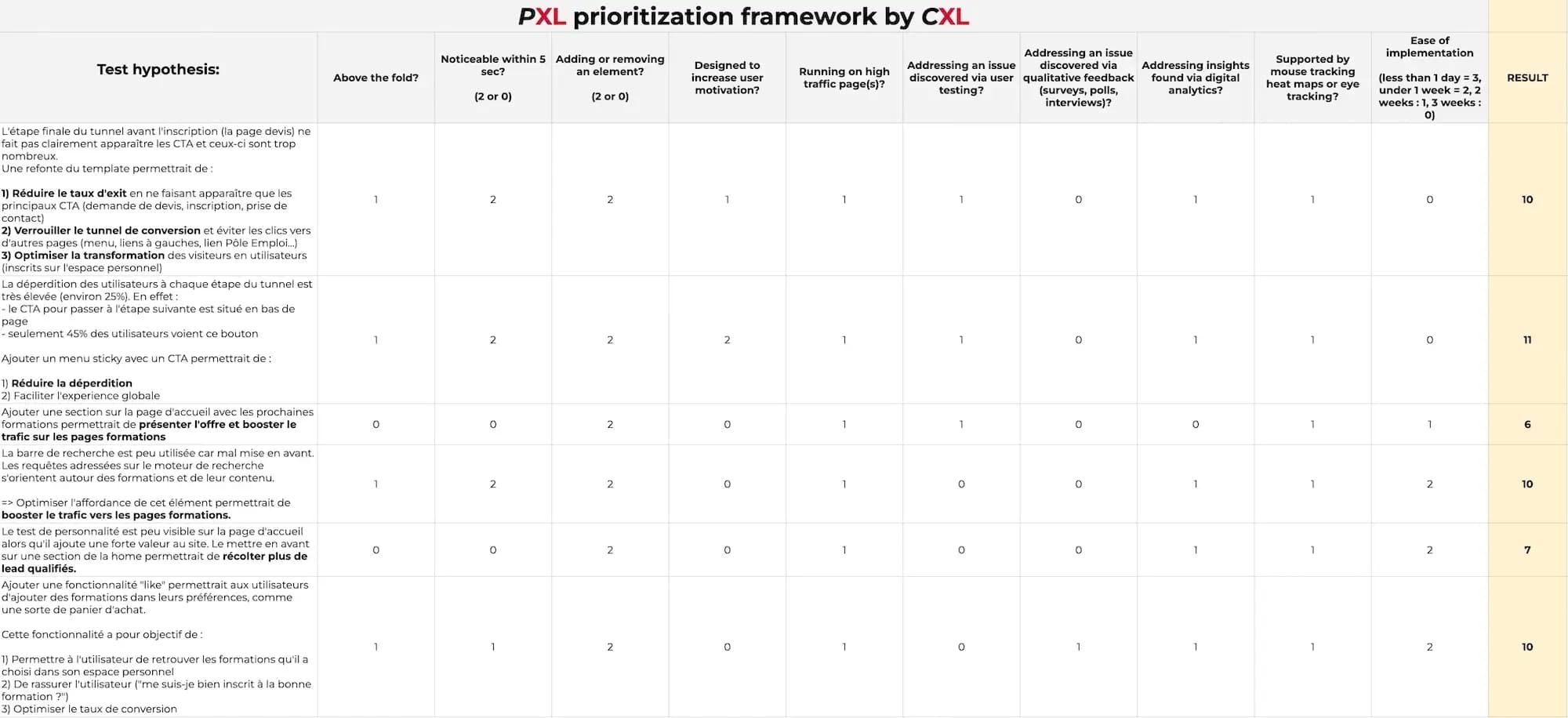
The traffic is there, it just doesn't convert enough. The lever is CRO: read the data, prioritize hypotheses, test, ship what wins — and drop what loses. At Institut Cassiopée, around fifteen PXL-prioritized hypotheses over 8 months delivered +120% conversion, with 60% of tests above +10%.
No one can find you. The lever is SEO: a semantic content architecture, solid technical foundations, and content produced at scale. At Workfluence, 500 job-profile pages generated by script and reviewed brought in 4,000 visits per month, for about $20 in subscription costs and three weeks of work.
You have numbers, but you don't trust them. The lever is Analytics: a tracking plan, clean measurement, readable dashboards — and the ability to read a test result without fooling yourself. In an A/B test for an airline (anonymized), 214,473 rows narrowed down to 135,298 visitors and 29 segments led to a decision not to ship.
The forms come in, but sales can't find the right contacts in them — or sees nothing arrive at all. This isn't one more lever but a chain: SEA, landing page, CRO and CRM, tuned together. That's qualified lead generation. At SITL, landing pages built around white papers took form completion from 27% to 45%.
SYS/PROOF
Named case studies, with the calculation baseline and what AI actually changed.
| Engagement | Before | After |
|---|---|---|
| SITL | 100 | 166 |
| Institut Cassiopée | 100 | 220 |
| Infirmière Reconversion | 100 | 250 |
Base 100 = measurement before intervention · completion 27% → 45% · +120% conversion · +150% conversion.
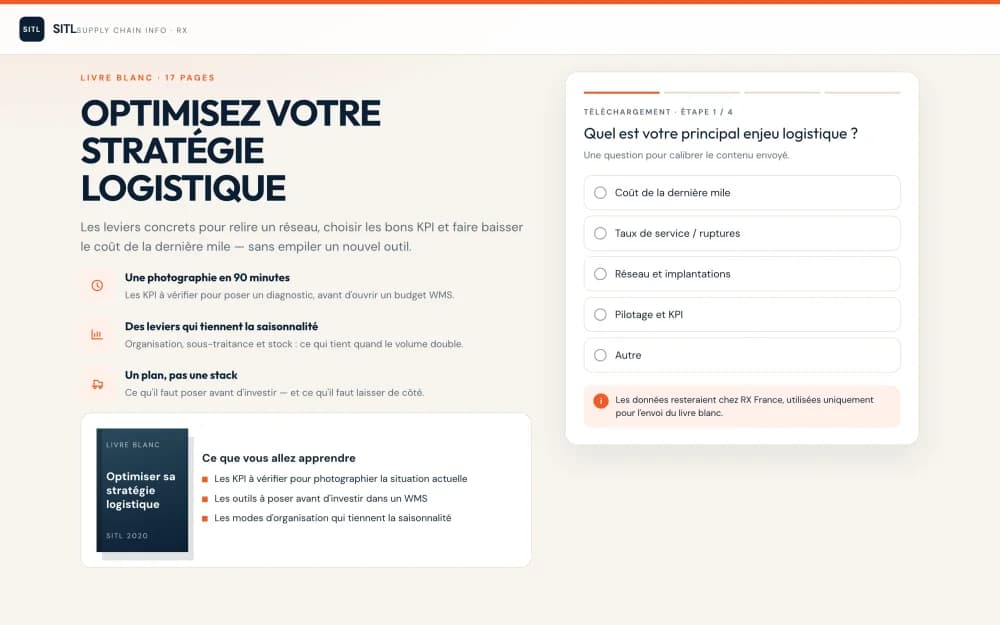

Analyzing an A/B test for an airline (−2.25%, do not ship) → Property-management quote landing page — Matera (22% → 38%) →
SYS/LOOP
The same loop across all four levers: measure → instrument → agents → ship → review.
01
Measure
Set the primary KPI and read the data before touching anything cosmetic.
We pick a single number to move, trace the funnel back to where it leaks, and write down the calculation baseline in black and white. Skip this step, and any gain claimed later is unverifiable.
02
Instrument
GA4 tracking plan, GTM tracking, readable Looker Studio dashboards.
A tracking plan written from the mockups, events named once and for all, a GTM container reviewed line by line, and dashboards that answer one question instead of thirty.
03
Agents
Extract, code and generate with agents; the studio keeps the decision.
SQL and Python to turn a raw extract into a usable set of segments, content generated at scale, page variants produced in series. Every agent output is reviewed before going live.
04
Ship
Deploy the test, page or campaign that earns its way to production.
We go live, watch the numbers over the first few days, and keep the ability to roll back. A losing test gets shipped in reverse: we pull the variant and write down why.
05
Review
Measure the effect, keep what works, then run the loop again.
We compare actual results to the KPI set in step 01, document the effect and statistical power, and pick the next hypothesis. It's this review step that separates a program from a string of one-off bets.
SYS/FAQ
The Growth & Performance family as a whole, not a single lever in isolation. CRO, SEO, SEA and analytics details live on each dedicated page.
An approach aimed at measurable growth across the whole journey — not just “more ads.” Acquisition, activation, retention, revenue, referral: the AARRR framework is a map, not a slogan.
Unlike a fixed media plan, we experiment: hypothesis, test, read the data, iterate. We combine levers — SEO, SEA, CRO, content, sometimes email — with a primary KPI, so we're not optimizing everything at once.
At Shamalo, agents handle the volume (content, variants, data extracts); the studio handles the decision. This isn't an eight-person “growth team.” It's a one-person studio, fully tooled up.
The same loop across all four levers: measure → instrument → agents → ship → review. We set the number to move, wire up tracking, produce (pages, tests, campaigns), read the result, and document it.
A/B tests, SQL extracts, content clusters, ad accounts — none of these are silos. They all answer the same business question. If tracking lies, everything else is theater — which is why Analytics is the foundation lever.
The pace gets set in writing. No “we're doing growth” without saying which lever kicks off in week 1.
Acquisition, Activation, Retention, Revenue, Referral. A map so you don't put everything on acquisition. A site that attracts but doesn't convert, a trial that doesn't activate, a customer who doesn't come back: these are different leaks.
We don't run through all five letters on every engagement. We identify where it's leaking right now. Often it's activation / conversion (CRO) while the budget is already on acquisition. Sometimes it's the reverse.
AARRR isn't a religion. It's a vocabulary for prioritizing. The engagement's primary KPI stays a single number, not five.
The ones that hit the business: qualified leads, quotes, sales, sign-ups, revenue — not vanity traffic on its own. As support metrics: step conversion rate, honestly read acquisition cost, retention if the model is a subscription.
A thirty-tile dashboard isn't a strategy. We pick a few, wire them up, and read them. The rest is noise. See Analytics for dashboard vs. analysis.
Metrics get set in writing at kickoff. Changing your KPI every two weeks is how a test never reaches a conclusion.
Yes — it's actually a good part of the field (schools, industry, business tools). A long cycle means: fewer conversions, more need for data extracts and CRM, more authority content, less “scale Meta tomorrow.”
B2B growth, here, often looks like: SEO / content for intent, landing pages and CRO on demand, lead qualification (see Matera), measurement all the way to sign-up or signed quote. Not a virality hack.
If your cycle is nine months long and you don't have a clean pipeline, the first lever isn't a button test. We'll say so.
Impact × confidence / effort — a PXL-style backlog, not a list of ideas from a meeting. We test what can move the primary KPI first, not what's fun to design.
Agents help produce more hypotheses and variants. They don't pile up the backlog — a human cuts it down. Too many experiments running in parallel, not enough traffic: nothing reaches a conclusion.
A losing test gets documented. That's a result. Relaunching the same idea under a different name three months later — that's not.
To extract, generate (content, page variants), code tests, and produce views. Not to “automate marketing” in the sense of a robot publishing on its own. The AI engineering page describes the protocol (GSD, review).
Useful automation, here, means a reviewed workflow: a content cluster that ships faster, a cleaned-up data extract, a series of landing pages. It's not a nurture email sequence with no human on the underlying message — unless you explicitly ask for it, and even then, with a safety net.
If you're only looking for an automation tool, that's not what we offer. If you're looking for someone who connects measurement, pages and agents, it is.
Optimizing everything at once. No KPI. Tracking that lies. SEA with no landing page. SEO with no intent. CRO with no conversions. A dashboard instead of a decision. A team (or a studio) with no decision-maker on the client side.
We name them on the call. The written scope exists so that “out of scope” is a real thing. A growth program with no out-of-scope becomes a catalog, and a catalog never reaches a conclusion.
With a 30-minute call: we identify the priority lever and the first test. Scoping within 48h.
SYS/NEXT
A 30-minute call is enough to identify the priority lever and the first test to launch. Written scope within 48h, no commitment.