SYS/CRO
Test what matters, ship what works — or say no.
CRO consultant: data-driven conversion rate optimization
CRO means turning more visitors into customers without buying more traffic: we spot the frictions in the journey, test hypotheses, and only ship what proves its gain.
CRO is part of our Growth & Performance expertise — CRO, SEO, SEA and analytics.
SYS/FOR
Who it's for
SaaS with traffic but few sign-ups
Visitors show up, activation stalls. We find where the funnel loses value before redesigning the homepage.
E-commerce or training business with a quote funnel
A long funnel, multiple steps, a form that scares people off. We test structure, proof and CTAs.
Team that wants to decide on numbers
Too many opinions, not enough proof. We set up a testing protocol to decide on data, not on whoever argues loudest.
SYS/SCOPE
What it covers
Six work streams — expand the one that applies to you.
Heuristic audit
Friction, clarity, value, motivation — the journey put through the wringer step by step.
Tracking plan and measurement
GA4 and GTM so every step of the funnel becomes a measurable event.
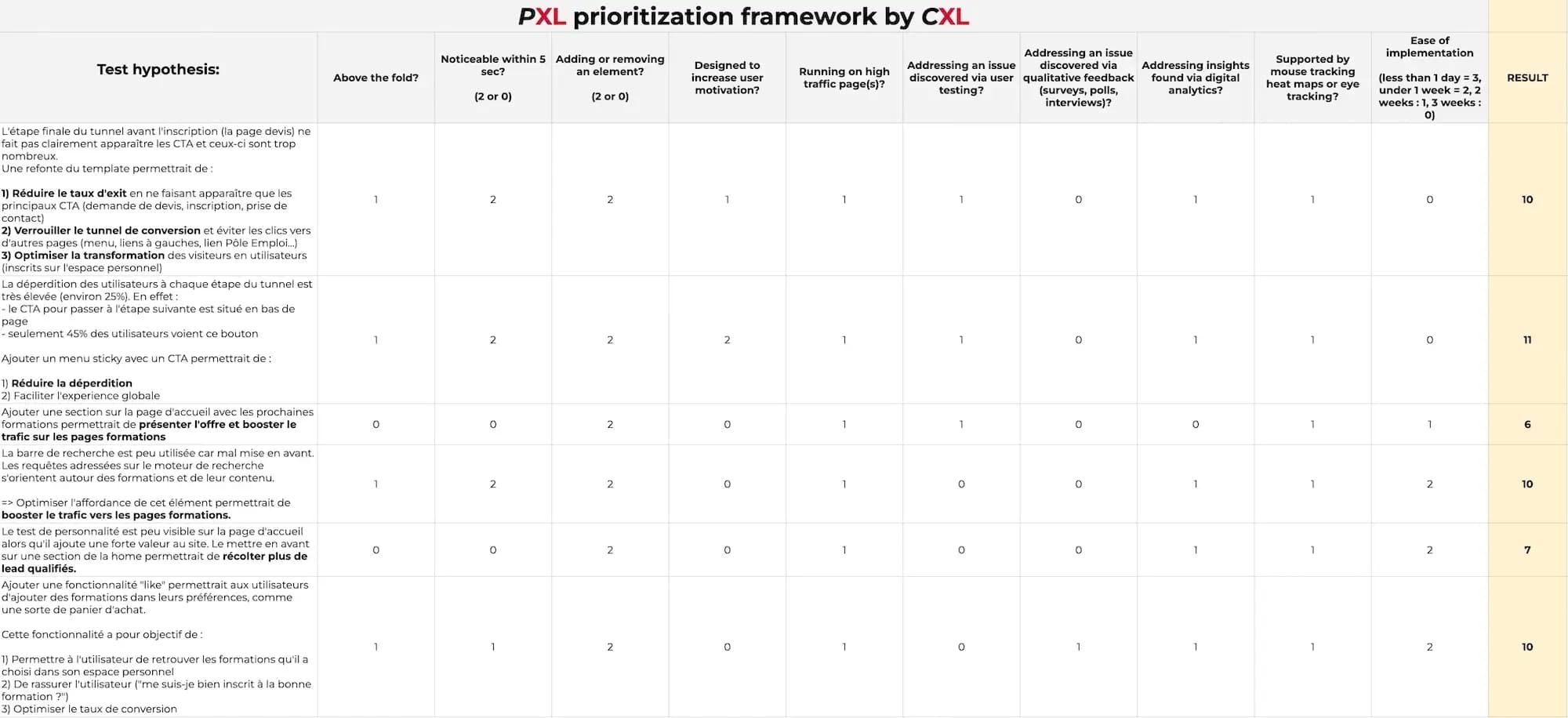
Prioritized hypotheses (PXL)
A backlog scored by impact, confidence and effort — we test in the right order.
A/B and MVT testing
Variants deployed on Webflow or in JS, run until statistical power is reached.
Data extract analysis
Unique visitors, SRM, z-test and segments — the analysis goes further than the A/B tool.
Recommendations and deployment
Ship the winner, document the loser, feed the next test.
SYS/AI
What AI changes here
Three views of the same CRO loop: what it used to cost, what agents speed up, and what can't be delegated.
Before
The loop was slow by design: the audit was done screen by screen, hypothesis scoring got negotiated in meetings, and analyzing a test extract took weeks before yielding a recommendation.
The result: we tested little, so we learned little, and the loudest opinion often ended up deciding instead of the data.
With agents
A 214,473-row extract becomes 135,298 visitors, an SRM, a z-test and 29 segments in days — then an explorer the client can use directly. Analysis time drops from weeks to days.
What changes isn't the method but its cost: the same statistical rigor, across more hypotheses, within the same budget.
Prioritization
PXL scoring is agent-assisted from the audit, then arbitrated by hand before entering the backlog.
Instrumentation
The tracking plan is generated from the mockups, reviewed line by line, then pushed into GTM with no measurement gap.
What stays human
The decision — ship, iterate or drop — stays human, and so does the backlog arbitration: an agent proposes a score, it doesn't choose what gets tested.
Review can't be delegated either: a poorly instrumented test produces a wrong decision with the same confidence as a clean one, and it takes a human eye to catch it before deployment.
SYS/LOOP
How we work
The studio's loop, applied to conversion.
- 01Measure — read what's already there: analytics, heatmaps, data extracts. Where and why do visitors drop off?
- 02Instrument — GA4 and GTM tracking plan so every step of the funnel is reliable.
- 03Hypotheses & agents — formulate, prioritize (PXL) and prepare variants with agents.
- 04Ship the test — deploy the A/B or MVT, let it run until it reaches the target statistical power.
- 05Review — analyze the data extract (SRM, z-test, segments), then decide: ship, iterate or drop.
SYS/PROOF
Proof
| Engagement | Before | After |
|---|---|---|
| UX/CRO conversion | 100 | 220 |
| Paid conversion (SEA mini-site) | 100 | 165 |
| Engagement | 100 | 130 |
Base 100 = measurement before intervention. Sources: +120% conversion (UX/CRO, 8 months, 15 hypotheses), +65% on paid traffic, +30% engagement.
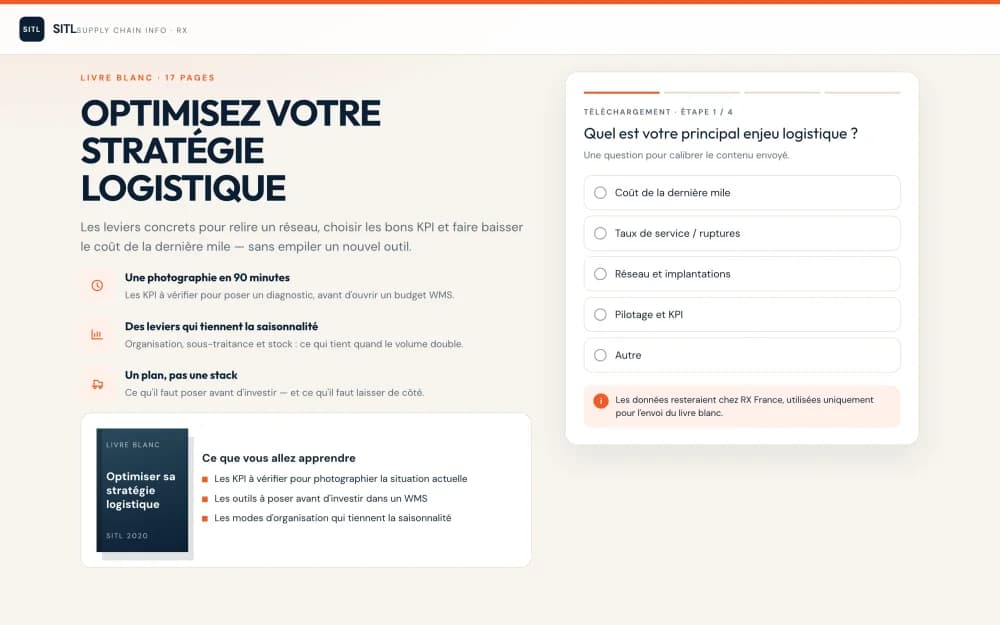
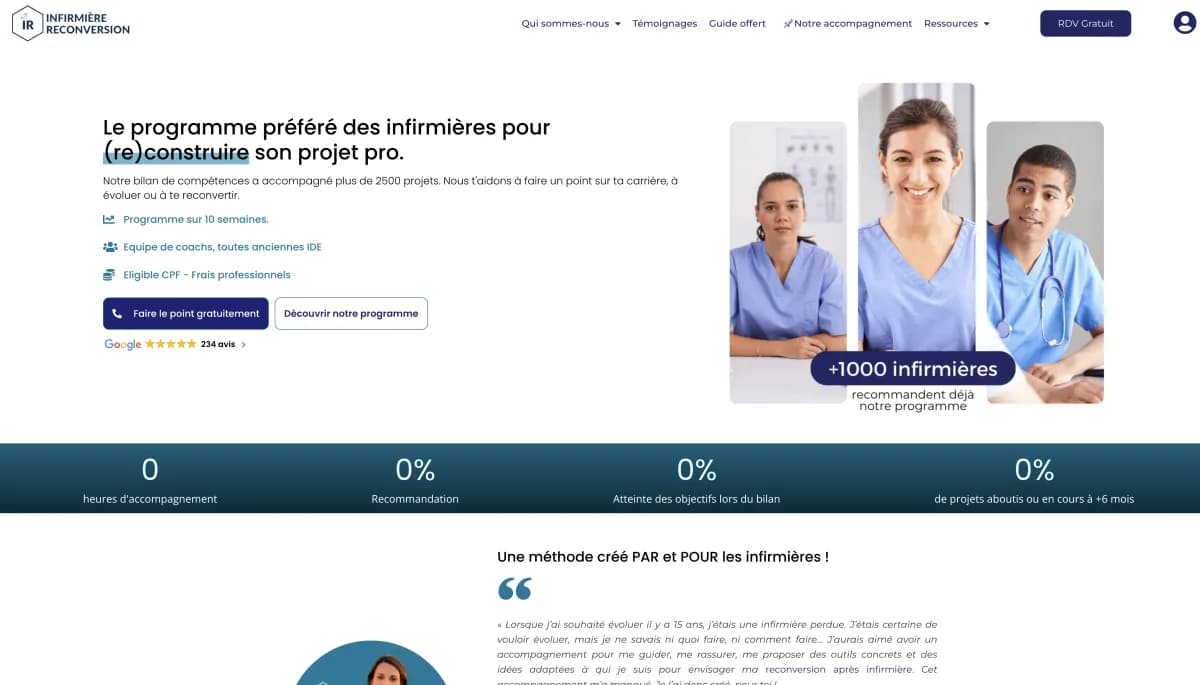
Analyzing an A/B test for an airline (−2.25%, do not ship) → Matera — property-management quotes, 22% → 38% →
SYS/TOOLS
Tools
- GA4
- GTM
- Looker Studio
- Lucky Orange / heatmaps
- SQL
- Python
- Webflow
SYS/FAQ
Frequently asked questions
What is CRO?
CRO is a set of techniques for increasing the share of visitors who complete the target action — purchase, quote request, sign-up, click — by working on the journey, not just the cosmetics.
MoreLess
We analyze behavior, identify frictions, and test solutions: content, forms, landing pages, calls to action, sometimes the offer itself. This isn't “a new header.” It's an experimentation program framed by a KPI.
The often-overlooked benefit: maximizing traffic you've already paid for or already earned. Every conversion point gained makes acquisition more profitable, without necessarily increasing the ad budget or SEO volume.
Why does CRO matter?
Attracting traffic — ads, SEO, email — costs money. If those visitors don't convert, acquisition is a money pit. CRO improves the return on existing traffic: more sales or leads for the same volume, sometimes for less budget.
When the goal is more leads from the same traffic, CRO becomes one link in a chain that runs all the way to the CRM.
MoreLess
It also reduces friction along the journey. A clearer funnel, fewer steps, social proof at the right moment: the experience improves, and visitors come back more easily. CRO and UX talk to each other; they're not the same thing (see below).
At Shamalo, CRO isn't a PDF audit that gets forgotten in a drawer. It's measure → hypothesis → variant → test → decision, with agents speeding up variant production, and a human review before shipping.
CRO or SEO first?
SEO brings people in; CRO gets them to convert. It's not the same lever, nor the same timeline. If there's already traffic converting poorly, CRO pays off faster: you stop throwing acquisition out the window.
MoreLess
Without traffic, an A/B test has no statistical power. So we start with SEO or SEA, and set up tracking so we're not flying blind once volume arrives. Most often, we run both in parallel, with a primary KPI so we're not optimizing everything at once.
The SEO page covers content clusters and content in detail; here, we cover what happens once the visitor has arrived.
What are the best practices — and how do you test?
A/B tests (sometimes MVT) on strong hypotheses: headline, offer, CTA, page structure — not ten micro color variants. We simplify the journey, clarify the steps, polish mobile, and add social proof wherever trust breaks down.
MoreLess
A test is only readable if it accumulates enough conversions per variant, and if there's no SRM. We check this in the data extract (SQL, Python), not just in the A/B tool. A winner “in the tool” can be a biased loser.
Common mistakes: testing too early, changing everything at once, stopping at the first fluctuation, ignoring mobile, forgetting tracking. The studio documents the loser as much as the winner: that's what feeds the next test.
What tools are used for CRO?
Measurement: GA4, GTM, Looker Studio, sometimes a heatmap / session replay tool (Lucky Orange). Testing: depending on the stack — Webflow, JS, an A/B tool already in place. Analysis: data extract + SQL + Python, because the tool often stops at the click.
MoreLess
We don't force a particular software suite on you. We adapt to what you have, fix the tracking plan if it lies, and only buy a tool if it unblocks a real question. The dashboard isn't the analysis.
Agents speed up variant production and data extract processing; they don't choose the KPI. See also the Analytics lever.
How long before you see results?
A test is measured in weeks, the time it takes to accumulate conversions — typically 2 to 6 weeks depending on traffic, sometimes longer if volume is low. A program, though, is measured in months: Cassiopée, 8 months, 15 tests, +120% CVR.
MoreLess
“Quick wins” (obvious friction, broken tracking, unreadable CTA) can move the needle sooner, without waiting for an A/B test. That's not an excuse to skip measurement: we still record the before / after.
No one can guarantee a multiplier. We can guarantee a method, a KPI, and the honesty to say when a test doesn't reach a conclusion.
Do you need a lot of traffic?
An A/B test needs conversions, not just visits. Below a certain volume, the test isn't readable: instead, we focus on high-impact changes, extract analysis, session review, qualitative decisions — and polish tracking for the day volume shows up.
MoreLess
SEA can serve as a kickstarter: paid traffic, dedicated landing pages, an early signal. CRO doesn't wait to be “big enough” to start; it just changes method depending on size.
If you barely have anyone on the site, the first lever is often not a button test. We'll say so from the very first call.
What's the difference between CRO and UX design?
UX aims for an experience that's smooth, understandable, sometimes delightful. CRO aims for a rate: more people completing the action. The two overlap — a broken journey converts poorly — but a beautiful interface can easily fail to convert, and an “ugly” funnel can easily sell.
MoreLess
CRO decides with tests and data extracts; UX often decides with user journeys, interviews, heuristics. Shamalo does both, in this order: measure first, then hypothesis, then variant. We don't redesign just to redesign.
If you're looking for art direction or a brand identity, this isn't the lever. If you're looking to move a conversion number, it is.
SYS/NEXT
Next step
Send us a data extract, a funnel or a page: we'll identify the first test to launch. Written scope within 48h, no commitment.
The other Growth & Performance levers